BC Conservation Foundation offices will be closed on Tuesday, September 30, 2025 for Orange Shirt Day, the National Day for Truth and Reconciliation, to honor the lost children and survivors of residential schools, their families and communities.
We recognize the importance of putting reconciliation into action.
I encourage everyone on our team to strengthen relationships with Indigenous folks and learn more about their communities, culture and history.
This is a day to reflect, engage and learn about BC’s colonial history and how our laws and practices continue to impact Indigenous communities.
As a settler organization of conservationists and land stewards working to make our land more inclusive, equitable, liveable and resilient; we are committed to collaborating with Indigenous communities and institutions to help build shared understanding and transform the way we interact with fish, wildlife and the land.
We encourage all of our staff, board and volunteers to use this day for reflection and to learn about our past while looking towards new possibilities with Indigenous people in the future.
We have compiled a list of resources to provide background and more information on Orange Shirt Day.
We have listed some events near our offices below.
We encourage you to attend events in your local community and take time to reflect on the meaning of this special day.
Explore the National Centre for Truth and Reconciliation, which offers free webinars during the week of September 22-26. These sessions provide valuable insights into the journey towards reconciliation.
Truth and Reconciliation Commission of Canada: Calls to Action
Learn about the 94 Calls to Action from the Truth and Reconciliation Commission of Canada, which outline steps for addressing the legacy of residential schools and advancing reconciliation.
Discover the history behind the Orange Shirt Campaign, a movement that commemorates the experiences of Indigenous children who were sent to residential schools and promotes the message that “Every Child Matters.”
Explore a curated list of books by Indigenous authors available at Surrey Library. These books offer diverse perspectives and stories that enrich our understanding of Indigenous cultures and histories.
Participate in various Indigenous tourism events happening around BC. Join an online lunch and learn, or attend an event in Kamloops, Osoyoos, Taylor, Whistler, Enderby, Hope, Chilliwack and more.
Check out Vancouver's best places webpages for local events across the lower mainland listed on that commemorate the National Day for Truth and Reconciliation. Engage with community activities and learn more about the path to reconciliation.
City of Kamloops and Tk̓emlúps te Secwépemc are putting on a National Day for Truth and Reconciliation event on September 30th. For reflection, remembrance, and healing. Activities, education, food and vending will be provided
The British Columbia Conservation Foundation's 2024 Annual Report is now available! Discover the highlights, achievements, and impact of our conservation efforts over the past year.
NOTICE is hereby given that the Annual General Meeting (AGM) of the Members of the British Columbia Conservation Foundation (the "Corporation") is called and will be held virtually on the 24th day of September 2025, at 7:00 pm (PDT) on MS Teams for the following purposes:
To receive the audited financial statements of the Corporation for the financial year ended March 31, 2025;
To elect Directors of the Corporation;
To appoint the Auditors of the Corporation for the ensuing year;
To transact such other business as may properly be brought before the meeting.
TO RSVP:
A person may apply to the Board for membership in the Society, and the person becomes a member on the Board’s acceptance of the application and membership dues.
Please RSVP to info@bccf.com with your name, address, email and telephone number if you plan to attend the AGM by 23rd day of September 2025 by 3:00 pm (PDT) prior to the commencement thereof.
Membership is $1.00 and payment can be sent by to our office by Canada Post or via e-transfer.
E-transfers - transfers@bccf.com. The question that every e-transfer from a society member should ask is “what is the first name of our Executive Director?”
The Province of BC and various Coastal First nations partnered in a transformative approach to conservation and stewardship resulting in a film called Coming Home to Grandmother’s Garden. The film highlights the significance of p’hwulhp (Garry Oak) ecosystems to Coastal First Nations, and intricately integrates the Indigenous and Western perspectives through the concept of two-eyed seeing towards conservation and stewardship efforts in the province.
BC Conservation Foundation is proud to be associated with the successful outcome of this multi-faceted partnership.

BC Conservation Foundation is pleased to announce the publication of a new scientific report by the Aquatic Research and Restoration Center’s Program Manager, Jamieson Atkinson, and Sam James from the Pacific Salmon Foundation.
The report offers a place-based perspective on rebuilding the endangered Nanaimo River summer Chinook salmon. This population has seen fewer than 1,000 adults returning each year since 2014 and was listed as endangered by COSEWIC in 2018, triggering what’s known as a Risk Assessment Method for Salmon (RAMS). Thanks to collaborations with the Snuneymuxw First Nations and Fisheries and Oceans Canada (DFO), Atkinson, a manager of the Bottlenecks to Survival Project, was invited to participate in the RAMS process, as well as a scientific review of the government-led recovery potential assessment. Through his involvement, Atkinson was able to contribute much needed local data and context to the rebuilding planning process.
“What becomes clear is the need for local ground-truthing of data and adaptive strategies that incorporate Indigenous knowledge in research agendas. This has largely been lacking; up until now, on too many peer-reviewed studies,” says Atkinson.
The Bottlenecks to Survival Project, funded by the British Columbia Salmon Restoration and Innovation Fund, is a large-scale research initiative in partnership with the Pacific Salmon Foundation that utilizes Passive Integrated Transponder (PIT) tags to better understand salmon survival “bottlenecks”. The project is well positioned to offer relevant data to support the recovery of this endangered population, including survival estimates and migration timing, as well as interactions with hatchery salmon, predators, and fisheries.
“We have data on these endangered salmon and they should absolutely be used to guide rebuilding efforts. And these data are accessible – our Nanaimo summer Chinook data dashboard allows everyone in this conversation to explore the data and better understand what’s going on with this population,” says James.
Key findings from preliminary data show very low survival (<1%), highlight broad outmigration and return windows for Chinook salmon and provide preliminary evidence of substantial variability in Chinook survival across habitats and life stages.
Data from the Bottlenecks to Survival Project were used to update existing assessments of limiting factors and life cycle model inputs. Tools, such as the RAMS limiting factors spreadsheet and the CEMPRA model, support recovery planning.
It is hoped that this research can respond to evolving ecological conditions to support a resurgence of Nanaimo's summer Chinook salmon in the coastal waterways of Vancouver Island.
Citation:
Atkinson, J. B., and James, S. 2025. Scientific Briefing: Nanaimo summer Chinook Risk Assessment & Life Cycle Model Updates to Inform a Stock Rebuilding Plan. Can. Contract. Rep. Hydrogr. Ocean Sci. 63: vi + 26 p
British Columbia Conservation Foundation’s Board of Directors announced five successful recipients for the Community Conservation Fund totaling $25,000.
A diverse range of applications were submitted from across the province, encompassing initiatives focused on community-based environmental education, collaboration, and habitat conservation . The Community Conservation Fund Committee evaluates proposals based on alignment with the BC Conservation Foundation’s mission to support community-based conservation efforts, addressing key needs or knowledge gaps, organizational capacity, and innovation. Collaboration with other groups, particularly with Indigenous communities, and the project's long-term impact are also important.
Successful proposals include the following:
1. Community Lichen Collection and Education Events for Caribou Recovery – Arrow Lakes Caribou Society
The lichen collection and education events project supports recovery of the Central Selkirk Caribou herd. They are working to recover the herd of southern mountain woodland caribou via the Central Selkirk Caribou Maternity Pen project. The maternity pen project is aimed at increasing calf survival and sustaining the herd population.
Tree lichen is collected, dried, and stored until March when caribou are brought into the pen. 300 kg of dried lichen is needed to transition the caribou to a specialized pellet diet during the penning season (March - July annually).
Lichen collection is done by volunteers and Arrow Lakes Caribou Society members and contractors. They host community lichen collection events to educate the general public about caribou recovery efforts, and the importance of immediate recovery action. They host school lichen collection field trips to teach and engage student groups about caribou recovery in BC.
Award – $5,000
2. Got Bats? BC Community Bat Program – British Columbia Conservation Foundation
"Got Bats?" is a network of community bat projects across BC that promotes bat conservation through (1) education and outreach to raise awareness of threats to bats and to recruit local bat stewards, (2) detection, protection and monitoring of bat roosts, (3) province-wide Citizen Science involvement to engage the public and detect population declines due to White-nose Syndrome and other threats, and (4) enhancement of habitat including installation of bat boxes.
Implemented by local, established stewardship organizations with direct landowner contacts, the importance of this initiative has been widely recognized by the BC Government and BC Bat Action Team, and support for the program is a high priority action item in the current BC Bat Action Plan.
Award – $5,000
3. Dart Creek Ecosystem Restoration Prescribed Fire Project – Golden District Rod and Gun Club
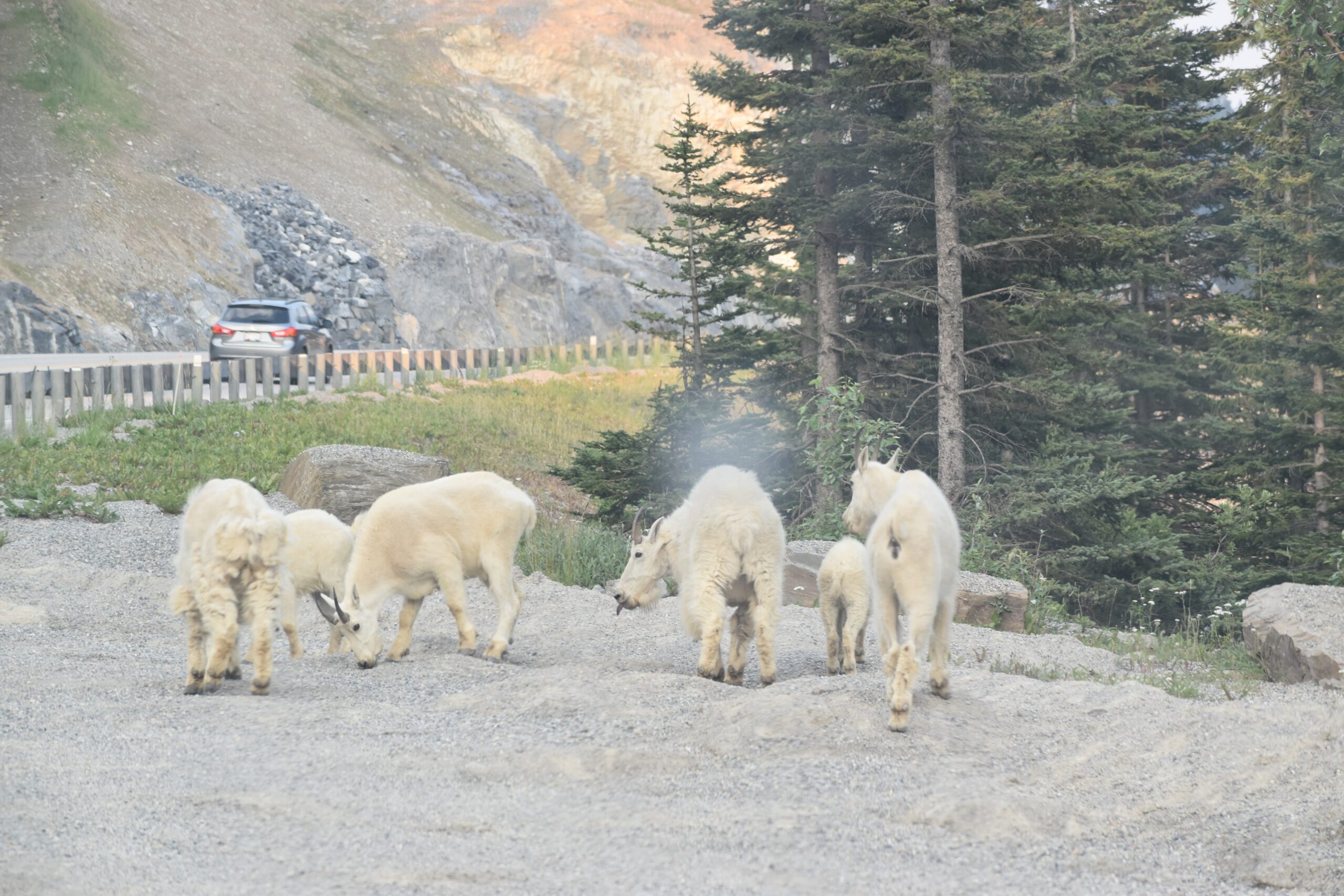
The Golden District Rod and Gun Club is proposing to reintroduce fire into dry ingrown habitats. The prescribed fire for ecosystem restoration and habitat enhancement would cover approximately 600 ha encompassing important habitats for rocky mountain bighorn sheep, mule deer, and mountain goats.
The intent of restoring conifer-encroached habitats is to increase forage availability and sightlines with larger goals of attracting ungulates (particularly sheep) to the treatment area, away from the habitat currently being used along the TransCanada Highway corridor. This will in turn aim to minimize losses from highway collisions and promote habitat connectivity between winter ranges and traditionally used summer habitats.
In addition to creating wildlife habitat, this project will support community security by reducing wildfire risk within the Wildfire Urban Interface (WUI) around Golden.
Award – $5,000
4. Wagg Creek Water Quality Improvement Project – North Shore Streamkeepers Society
Addressing non-point pollution is critical for urban salmon conservation. The funds will be used for laboratory testing phase of a community-based water quality project to inform restoration and water quality remediation. Wagg Creek has good cutthroat and coho salmon habitat. Yet it may receive the North Shore's most concentrated urban runoff due to intense densification. As a major tributary of Mosquito Creek, a salmon rearing/migration corridor to which salmonids are returning in large numbers, Wagg’s toxicity has profound downstream impacts.
Since August 2024, the organisation has been monitoring Wagg's stormwater outfalls to prioritize catchment(s) with the highest potential pollutant loading, but characterizing pollutants is essential to implement remediation. 15 local volunteers are engaged, and they are leveraging industry expertise.
Award – $5,000
5. Tsilhqot'in National Government Small Mammals Program – Tsilhqot'in National Government
The Tsilhqot'in National Government Small Mammal Program is commencing with the pilot year of small mammal surveying in three different areas of the Chilcotin to begin collecting baseline information regarding current species presence and distribution. This pilot year will help to inform any expansion of the surveys for long-term monitoring across various habitats and habitat management methodologies including logging, habitat enhancement projects, access management restoration projects, and changes over time.
Small mammals are a significant part of the nature habitat yet are largely ignored. This program will start looking at small mammals to feed Chilcotin specific information into a number of planning processes that are commencing in the area ranging from forestry planning to non-game animal management planning. Without current information on small mammals their ability to properly and adequately manage habitats for both these species and their predators will be limited.
Award – $5,000
Media Contact:
David Hendrickson Executive Director 604-576-1433 x 315 dhendrickson@bccf.com
About us: The BC Conservation Foundation promotes thriving fish and wildlife populations through education, collaboration and habitat conservation. We do this by managing projects and initiatives on behalf of key stakeholders and running our own signature programs, such as the Community Conservation Fund. For more information, please visit www.bccf.com.