
Protecting Rivers from Sunscreen Pollution
Understanding Sunscreen's Impact in Freshwater
Join our mission to safeguard aquatic ecosystems from harmful sunscreen chemicals. Learn how you can make a difference.
Our Research Initiative
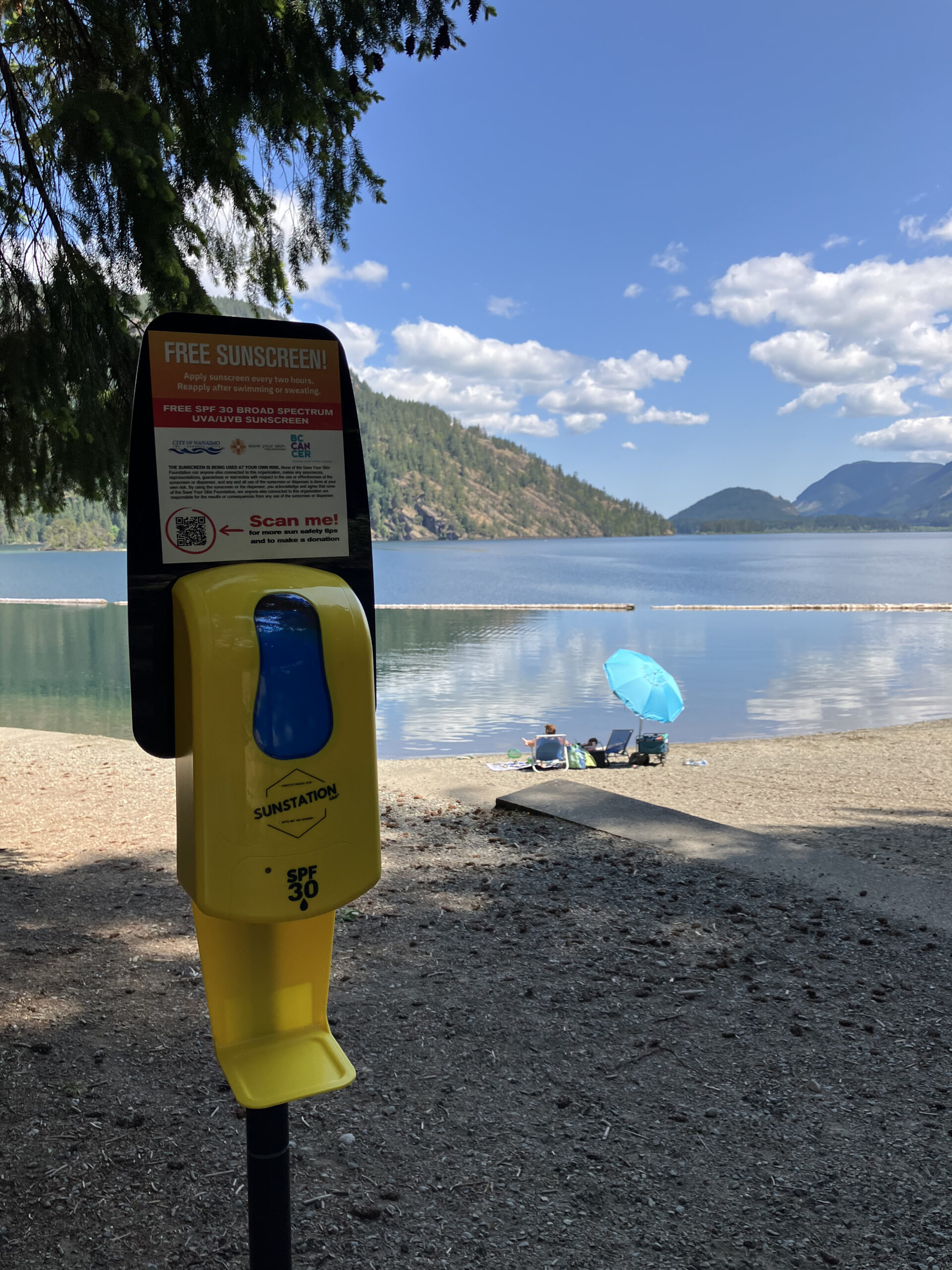
The Aquatic Research and Restoration Centre has been investigating sunscreen contamination in Cowichan Lake and River on Vancouver Island since 2019. As a popular tourist destination, there are many people recreating on the beautiful waters around Lake Cowichan – and bringing lots of sunscreen with them. Our project aims to identify hotspots of chemical sunscreen contamination, understand their impact on aquatic life, and promote the use of environmentally safe alternatives. Through rigorous scientific study and community engagement, we strive to protect our precious water resources for future generations.
Guidelines for Choosing Safe Sunscreen
Protect Yourself and Aquatic Life
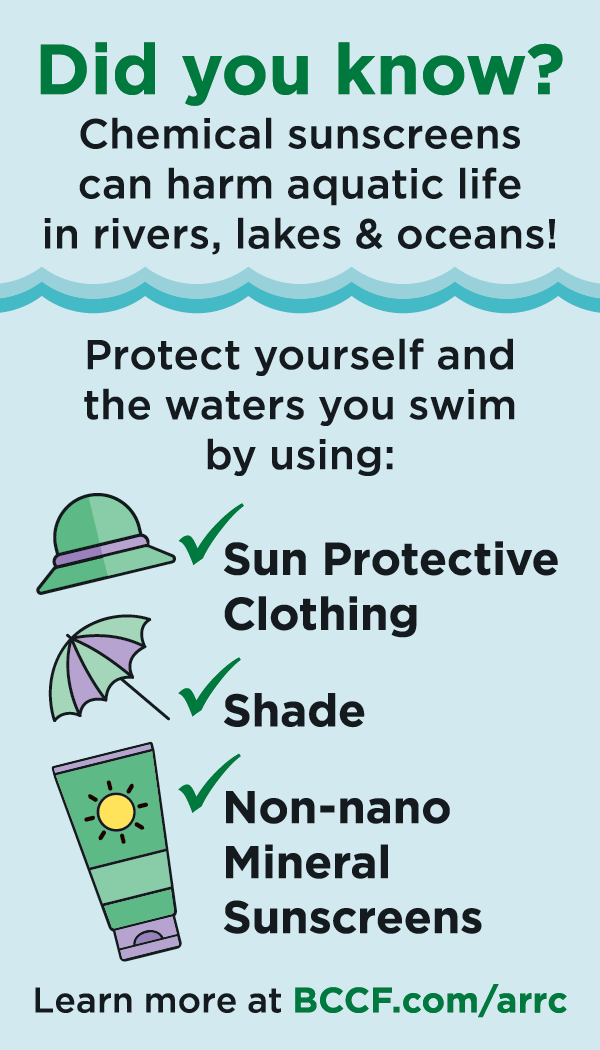
Reduce environmental impact by choosing mineral sunscreen and using clothing or shade.
More details
-
- Chemical sunscreens can harm rivers, lakes, and oceans.
- Wear sun-protective clothing to reduce sunscreen use.
- Seek shade during peak sun exposure
- Use non-nano mineral sunscreen as a safer alternative.
Recommended Sunscreens and Ingredients to Avoid
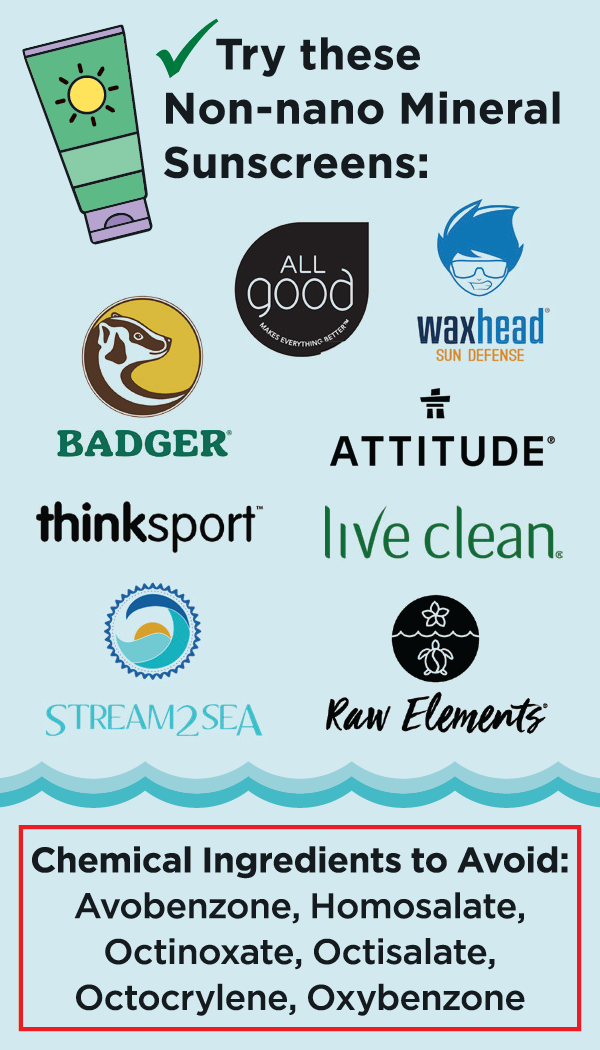
Choose non-nano mineral sunscreens and avoid chemicals that can harm aquatic ecosystems.
More details
- Recommended non-nano mineral sunscreen brands include Badger, All Good, Waxhead, Attitude, Thinksport, Live Clean, Stream2Sea, and Raw Elements.
- Avoid ingredients such as oxybenzone, octinoxate, octocrylene, avobenzone, homosalate, and octisalate
- These chemicals can negatively impact aquatic environments.
How to Choose River-Safe Sunscreen
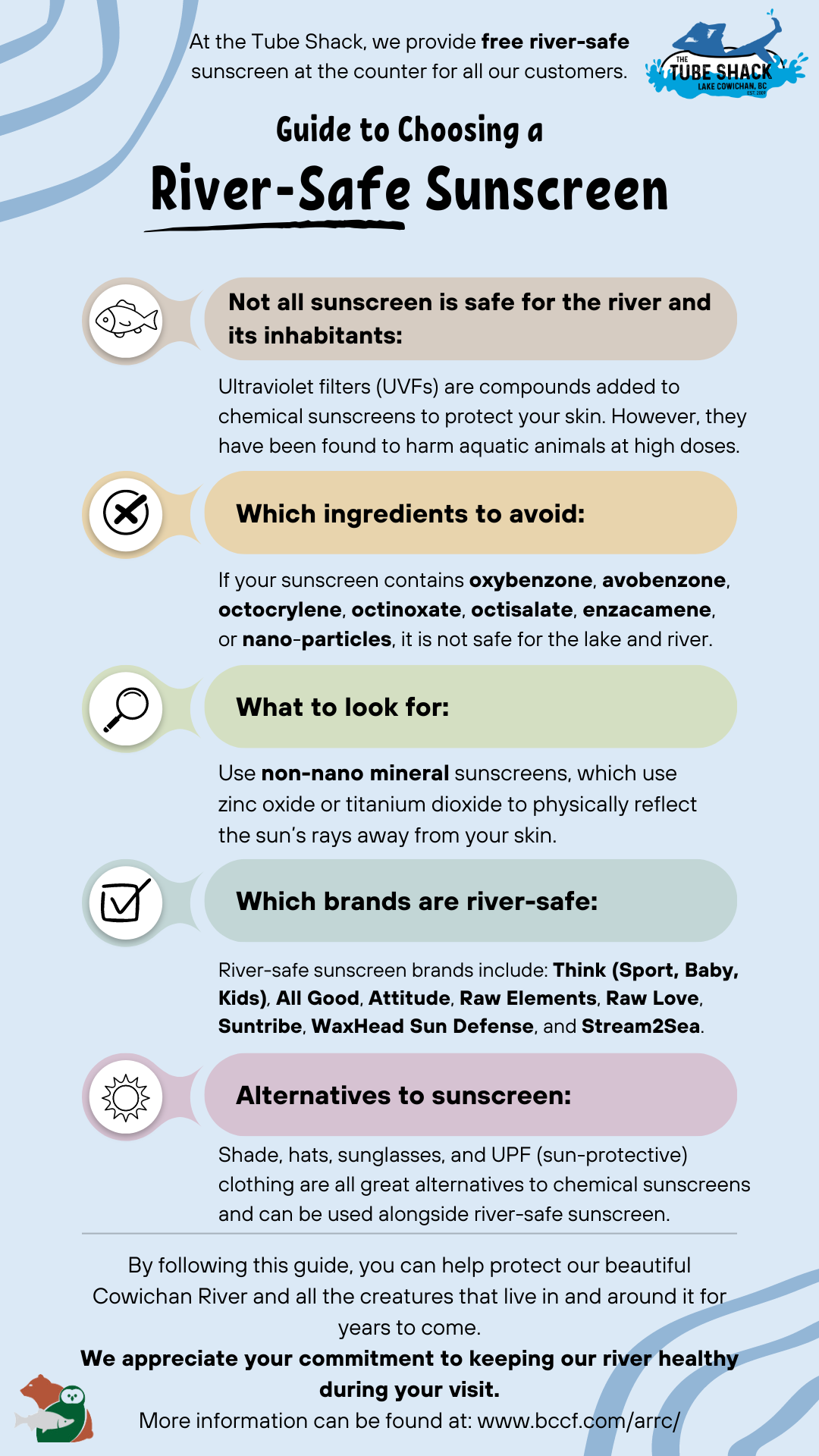
Look for mineral ingredients and avoid harmful chemicals.
More details
- Choose zinc oxide or titanium dioxide as active ingredients.
- Avoid oxybenzone and octinoxate
- Check for reef-safe or eco-conscious labeling.
- Apply sunscreen at least 30 minutes before entering water.
- Use hats, sunglasses, and UPF clothing for added protection.
Media Coverage
Related Articles
Cowichan watershed users encouraged to make safer sunscreen selections
Cowichan Valley Citizen
Non-profit groups monitor for sunscreen contamination in Cowichan watershed
Lake Cowichan Gazette
Project Reports
Explore our comprehensive reports detailing the research on sunscreen effects on river ecosystems.
| Title | Date | Author(s) |
| Investigating Impacts of Ultraviolet Filters on the Cowichan River Ecosystem - Year 1 |
February 2021 | Rodgers, T. Atkinson, J. Lattanzio-Battle, W. Vandergrift, G. Gill, C. |
| Investigating Impacts of Ultraviolet Filters on the Cowichan River Ecosystem - Year 2 |
February 2022 | Rodgers, T. Lattanzio-Battle, W. Atkinson, J. Gill, C. |
| Investigating Impacts of Ultraviolet Filters on the Cowichan River Ecosystem - Year 3 |
March 2023 | Rodgers, T. Aplin, R. Monaghan, J. Atkinson, J. Gill, C. Krogh, E. |